ABSTRACT
Organic solar cells based on bulk heterojunction (BHJ) structures have attracted considerable attention because of their low fabrication cost, mechanical flexibility, and compatibility with solution-processing techniques. In BHJ organic photovoltaic devices, nanoscale morphology and crystallinity of the photoactive layer critically influence photovoltaic performance. In this study, the effects of solvent selection and thermal annealing on crystallization evolution and photovoltaic characteristics of P3HT:PCBM organic solar cells were systematically investigated. Three different solvents, including toluene, chlorobenzene (CB), and dichlorobenzene (DCB), were employed for active-layer fabrication, followed by post-thermal annealing treatment. UV–visible absorption spectroscopy revealed solvent-dependent differences in molecular ordering and intermolecular π–π interactions within the active layer. X-ray diffraction analysis confirmed that thermal annealing significantly enhanced crystallinity and lamellar ordering of P3HT domains, particularly for CB-processed films. Electrical characterization demonstrated that solvent evaporation behavior strongly affects photovoltaic performance. Among the investigated devices, the thermally annealed CB-processed device exhibited the highest power conversion efficiency of 1.83% with an enhanced short-circuit current density of 7.057 mA cm⁻². The improved device performance is attributed to optimized crystallization behavior and balanced nanoscale phase separation induced by the moderate evaporation characteristics of CB. In contrast, although DCB-assisted films exhibited relatively strong optical absorption and enhanced crystallinity, excessively slow solvent evaporation likely induced excessive aggregation and coarse phase separation, limiting efficient photovoltaic characteristics. These results demonstrate that solvent engineering combined with thermal annealing is an effective strategy for controlling morphology evolution and crystallization behavior in P3HT:PCBM bulk heterojunction solar cells.
-
KEYWORDS: Organic solar cells, P3HT:PCBM, Solvent engineering, Thermal annealing, Crystallinity, Charge transport
1 Introduction
Organic photovoltaic (OPV) devices based on bulk heterojunction (BHJ) structures have attracted significant attention owing to their advantages of low fabrication cost, mechanical flexibility, light weight, and compatibility with large-area solution processing techniques [
1–
3]. Among various polymer donor materials, poly(3-hexylthiophene) (P3HT) combined with [
6,
6]-phenyl-C61-butyric acid methyl ester (PCBM) has been widely investigated as a representative BHJ system because of its relatively simple fabrication process and well-understood morphology-dependent photovoltaic behavior [
3–
6].
The photovoltaic performance of P3HT:PCBM solar cells is strongly influenced by the nanoscale morphology of the photoactive layer [
7,
8]. Efficient exciton dissociation and charge collection require an optimized phase-separated structure with appropriate donor–acceptor interfacial areas and continuous pathways for carrier transport [
7–
9]. Therefore, controlling polymer crystallinity and phase separation during film formation is essential for improving device performance [
10].
Previous studies have demonstrated that processing parameters such as spin-coating conditions, drying time, and solution concentration significantly influence the structural ordering of P3HT chains and the distribution of PCBM domains [
11]. In particular, solvent evaporation behavior during film formation critically affects molecular self-organization, crystallization behavior, and intermolecular π–π stacking within the active layer [
11,
12]. Slower solvent evaporation generally promotes enhanced polymer chain ordering and lamellar stacking, which can improve charge transport characteristics [
12].
In addition to drying kinetics, intrinsic solvent properties including boiling point, vapor pressure, and solubility parameter also play important roles in determining the final morphology of P3HT:PCBM films [
13–
15]. Solvent selection influences the phase separation scale, polymer chain alignment, and aggregation behavior of donor and acceptor materials [
14,
15]. Furthermore, post-thermal annealing can additionally modify molecular ordering and crystallinity of the active layer, resulting in changes in optical absorption and electrical characteristics. Although numerous studies have investigated morphology optimization in P3HT:PCBM systems, the combined influence of solventdependent evaporation behavior and thermal annealing on crystallization evolution and photovoltaic characteristics remains insufficiently understood.
In this study, we investigate the effects of different solvents, including toluene, chlorobenzene (CB), and dichlorobenzene (DCB), on the structural and electrical characteristics of P3HT:PCBM bulk heterojunction solar cells. Thermal annealing was additionally applied to examine solvent-dependent crystallization evolution and morphology changes in the active layer. Optical absorption spectroscopy, X-ray diffraction (XRD), and current density–voltage (J–V) measurements were employed to evaluate the relationship between morphology evolution and photovoltaic performance. The results demonstrate that solvent selection significantly affects the crystallinity and molecular ordering of P3HT domains. In particular, CB-processed devices exhibited enhanced short-circuit current density and improved power conversion efficiency after thermal annealing, which is attributed to optimized morphology and enhanced intermolecular ordering. These findings provide useful insight into solventengineering strategies for improving the performance of polymerbased organic photovoltaic devices.
2 Experimental
2.1 Materials
Poly(3-hexylthiophene-2,5-diyl) (P3HT) was used as the electron donor material and [6,6]-phenyl-C61-butyric acid methyl ester (PCBM) was used as the electron acceptor material for the fabrication of bulk heterojunction organic solar cells. The P3HT:PCBM active-layer solution was prepared at a total concentration of 20 mg mL⁻¹ using a donor-to-acceptor weight ratio of 1:0.8. The solutions were dissolved in toluene, chlorobenzene (CB), and dichlorobenzene (DCB), respectively, and stirred at 60°C for 24 h prior to film deposition.
2.2 Device Fabrication
Indium tin oxide (ITO)-coated glass substrates were used as transparent electrodes. The ITO substrates were sequentially cleaned using acetone, methanol, and deionized water in an ultrasonic bath for 10 min each in order to remove organic contaminants and improve surface wettability. Poly(3,4-ethylenedioxythiophene):poly(styrenesulfonate) (PEDOT:PSS) was spin-coated onto the cleaned ITO substrates to form a hole transport layer. The PEDOT:PSS layer was deposited using a twostep spin coating process at 500 rpm for 10s followed by 6,000 rpm for 40 s, and subsequently annealed at 140°C for 10 min to remove residual solvent and improve film uniformity. The P3HT:PCBM active layer solutions prepared with different solvents were deposited onto the PEDOT:PSS-coated substrates by spin coating. The active layer was spin-coated at 1,000–1,500 rpm for 30–60s, resulting in an active-layer thickness of approximately 100–150 nm. Care was taken to minimize air exposure time during coating because of the high volatility of organic solvents. The films were divided into two groups to investigate the effect of post-thermal annealing. One group of devices was thermally annealed at 150°C for 10 min under ambient atmosphere, while the other group was left untreated for comparison. Finally, aluminum (Al) electrodes were thermally evaporated onto the active layer using a thermal evaporator under vacuum conditions (~10⁻⁵ Torr) to form the cathode. Aluminum electrodes with a thickness of approximately 100 nm were thermally evaporated under a vacuum level of ~10⁻⁵ Torr. The active device area was defined as 0.1 cm².
The optical absorption characteristics of the P3HT:PCBM thin films were measured using a UV–visible spectrophotometer to analyze the effect of solvent type and thermal annealing on molecular ordering in the active layer. The crystallinity and structural ordering of the polymer films were characterized using X-ray diffraction (XRD) analysis. The diffraction patterns were used to evaluate changes in polymer chain alignment induced by solvent-dependent film formation and thermal annealing. The electrical characteristics of the fabricated solar cells were measured using a solar simulator under AM 1.5 G illumination (100 mW/cm²). Current density–voltage (J–V) curves were obtained to extract key device parameters, including short-circuit current density (Jsc), open-circuit voltage (Voc), fill factor (FF), and power conversion efficiency (η).
3 Results and Discussion
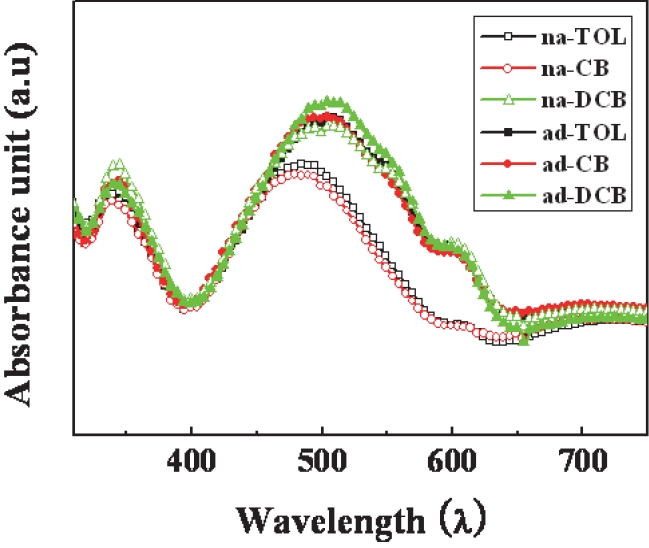
Figure 3 shows the UV–visible absorption spectra of P3HT:PCBM thin films prepared using different solvents with and without thermal annealing. The absorption spectra exhibit characteristic absorption bands originating from the π–π* transition of the P3HT backbone, which is closely related to the conjugation length and intermolecular ordering of polymer chains within the active layer [
12].
Differences in absorption behavior were observed depending on the solvent type. Among the investigated solvents, dichlorobenzene (DCB)-processed films exhibited relatively stronger absorption intensity, indicating enhanced molecular ordering and aggregation of P3HT chains within the active layer. In contrast, chlorobenzene (CB)-processed films showed a more balanced absorption behavior after thermal annealing. The enhanced absorption shoulder observed after annealing suggests improved intermolecular π–π stacking and increased conjugation length of the polymer backbone [
12,
16,
17]. These changes are associated with enhanced molecular self-organization during solvent evaporation and thermal treatment.
The solvent-dependent absorption behavior can be explained by differences in solvent evaporation characteristics. DCB possesses a relatively high boiling point and slow evaporation rate compared with toluene and CB, which promotes prolonged molecular reorganization during film formation. However, excessively slow solvent evaporation may also induce excessive aggregation and coarse phase separation within the bulk heterojunction structure. In contrast, CB provides a more moderate drying behavior, resulting in optimized nanoscale morphology and improved molecular ordering after thermal annealing.
The optical absorption results indicate that solvent selection strongly influences molecular packing behavior and crystallization evolution in P3HT:PCBM films. Since nanoscale morphology critically affects exciton diffusion and charge collection processes, solvent-dependent morphology evolution plays an important role in determining photovoltaic performance of polymer solar cells [
16]. The enhanced absorption shoulder observed near 550–610 nm after thermal annealing is closely associated with improved intermolecular π–π stacking and extended conjugation length of P3HT chains. This tendency is consistent with the increased (100) diffraction intensity observed in the XRD analysis, indicating that thermal annealing promotes molecular self-organization and crystallization within the active layer. The improved structural ordering can enhance charge carrier mobility and suppress recombination loss, thereby contributing to the increased
Jsc and improved photovoltaic performance of the thermally annealed CBprocessed devices.
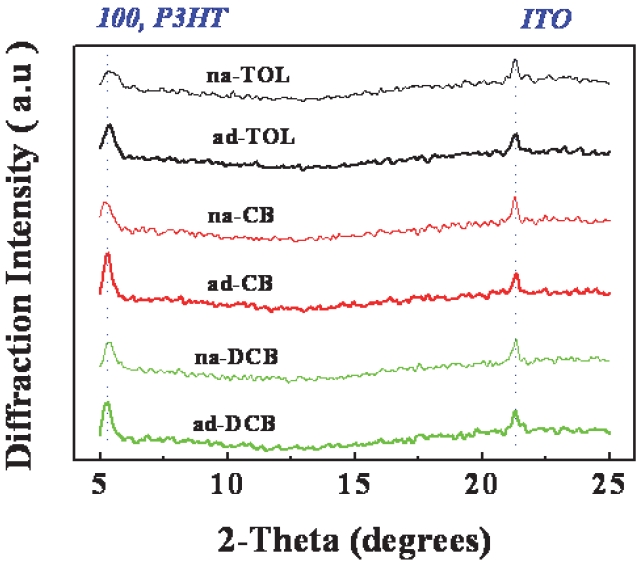
Figure 4 shows the X-ray diffraction (XRD) patterns of P3HT:PCBM thin films prepared using different solvents and thermal annealing conditions. The diffraction peak observed near 2θ ≈ 5.3° corresponds to the (100) diffraction plane of P3HT, which is associated with lamellar stacking and structural ordering of polymer chains within the active layer [
18].
The XRD results indicate that thermal annealing significantly enhances crystallinity of P3HT domains, particularly for CBprocessed films. Increased diffraction intensity after annealing suggests enhanced molecular ordering and stronger intermolecular interactions between polymer chains [
18]. Thermal annealing promotes rearrangement of polymer chains into energetically favorable configurations, resulting in improved lamellar stacking and enhanced structural ordering within the active layer.
The solvent-dependent crystallization behavior can also be explained by differences in solvent evaporation kinetics. Toluene evaporates relatively rapidly during spin coating, which may limit sufficient molecular self-organization of polymer chains. In contrast, DCB evaporates much more slowly, allowing enhanced crystallization but also increasing the possibility of excessive aggregation and non-uniform phase separation. CB exhibits intermediate evaporation behavior, which appears to provide a more favorable balance between crystallization and nanoscale phase separation after thermal annealing.
These results indicate that both solvent selection and post-thermal annealing strongly influence crystallization evolution and morphology optimization of P3HT:PCBM bulk heterojunction films [
18,
19]. In addition to the enhanced diffraction intensity, the thermally annealed CB-processed film exhibited a relatively sharper (100) diffraction peak near 2θ ≈ 5.3°, suggesting improved lamellar ordering and increased crystalline domain formation of P3HT chains. The reduced peak broadening after thermal annealing indicates enhanced structural ordering and more effective intermolecular packing within the active layer. Improved crystallinity can facilitate hole transport by forming continuous charge transport pathways along ordered P3HT domains, thereby contributing to the enhanced short-circuit current density observed in the J–V characteristics.
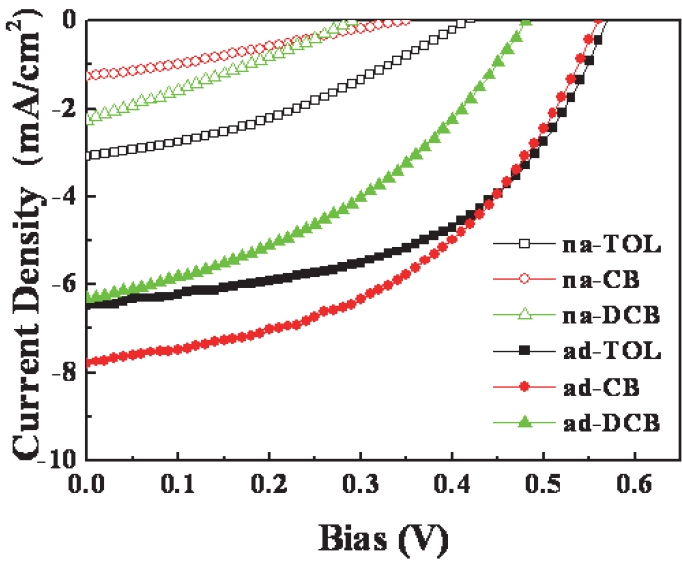
Figure 5 shows the current density–voltage (
J–V) characteristics of the fabricated solar cells measured under AM 1.5 G illumination, and the extracted photovoltaic parameters are summarized in
Table 1. The power conversion efficiency (η) of organic solar cells is expressed as:
The short-circuit current density (Jsc), open-circuit voltage (Voc), fill factor (FF), and η were used to evaluate the electrical characteristics of the fabricated devices.
Among the investigated devices, the CB-processed device after thermal annealing exhibited the highest Jsc of 7.057 mA cm⁻², which was significantly higher than those of the toluene-based (5.826 mA cm⁻²) and DCB-based devices (5.745 mA cm⁻²). The enhanced Jsc suggests improved charge collection behavior resulting from optimized nanoscale morphology and enhanced molecular ordering within the active layer.
The
Voc values showed relatively small variations depending on solvent type, ranging from 0.2894 V to 0.5733 V. Since
Voc is mainly determined by the energy level difference between donor and acceptor materials, solvent-induced morphology changes have relatively limited influence on
Voc characteristics [
9].
The
FF also increased after thermal annealing, particularly for the toluene- and CB-processed devices. The improvement in
FF is attributed to enhanced structural ordering and reduced resistive loss within the active layer after thermal annealing [
20]. Improved molecular packing can facilitate more efficient charge extraction and suppress unfavorable carrier recombination behavior within the bulk heterojunction structure [
20].
As a result of the combined improvements in
Jsc and
FF, the highest η of 1.83% was achieved for the CB-processed device after thermal annealing. The improved photovoltaic performance is attributed to optimized crystallization behavior and balanced nanoscale morphology induced by the moderate solvent evaporation characteristics of CB [
19]. In contrast, although DCBassisted films exhibited relatively strong optical absorption and enhanced crystallinity, excessively slow solvent evaporation likely induced excessive aggregation and coarse phase separation, which may limit efficient charge collection characteristics. These results clearly demonstrate that solvent-dependent evaporation behavior and post-thermal annealing strongly influence crystallization evolution and morphology optimization in P3HT:PCBM bulk heterojunction solar cells.
4 Conclusion
In this study, the effects of solvent selection and thermal annealing on the structural and photovoltaic characteristics of P3HT:PCBM bulk heterojunction organic solar cells were systematically investigated. The results demonstrate that solvent-dependent evaporation behavior plays a critical role in determining crystallization evolution and nanoscale morphology of the photoactive layer. UV–visible absorption analysis revealed solvent-dependent differences in molecular ordering and intermolecular π–π interactions within P3HT:PCBM films. X-ray diffraction analysis confirmed that thermal annealing significantly enhanced crystallinity and lamellar ordering of P3HT domains, particularly for chlorobenzene (CB)-processed films. The improved structural ordering is attributed to enhanced molecular self-organization during solvent evaporation and post-thermal annealing.
Electrical characterization showed that solvent selection strongly influences short-circuit current density and overall photovoltaic performance. Among the investigated solvents, the CB-processed device exhibited the highest power conversion efficiency of 1.83% after thermal annealing. The enhanced performance is attributed to optimized crystallization behavior and balanced nanoscale phase separation induced by the moderate evaporation characteristics of CB. In contrast, although dichlorobenzene-assisted films exhibited relatively strong optical absorption and enhanced crystallinity, excessively slow solvent evaporation likely induced excessive aggregation and coarse phase separation, limiting efficient photovoltaic characteristics. The present results suggest that excessive crystallization alone does not necessarily guarantee improved photovoltaic performance. Instead, balanced nanoscale phase separation and optimized molecular ordering are critically important for achieving efficient charge generation and transport in P3HT bulk heterojunction solar cells. Overall, the present study demonstrates that solvent engineering combined with thermal annealing is an effective strategy for controlling crystallization evolution and morphology optimization in P3HT:PCBM photovoltaic systems. The findings provide useful insight into the relationship between solvent evaporation behavior, molecular ordering, and photovoltaic characteristics in polymer-based organic solar cells.
Notes
-
Acknowledgement
This research was supported by the Regional Innovation System & Education (RISE) program through the Ulsan RISE Center, funded by the Ministry of Education (MOE) and the Ulsan Metropolitan City, Republic of Korea (2026-RISE-07-002).
-
Conflict of Interest
The authors have no conflicts of interest to declare.
-
Author Contributions
Dong-Kyun Kim: Conceptualization, Validation, Formal analysis.
Byungyou Hong: Supervision, Project administration, Funding acquisition.
Hyung Jin Kim: Writing - Original Draft, Writing - Review & Editing, Visualization, Funding acquisition.
Data Availability
Data available within the article or its supplementary materials.
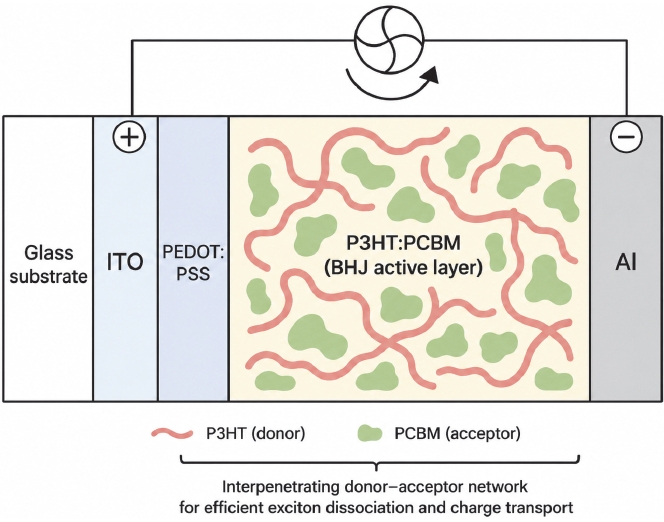
Fig. 1.Schematic illustration of the bulk heterojunction (BHJ) organic solar cell structure consisting of ITO/PEDOT:PSS/P3HT:PCBM/Al layers. The interpenetrating donor–acceptor network within the P3HT:PCBM active layer enables efficient exciton dissociation and charge transport
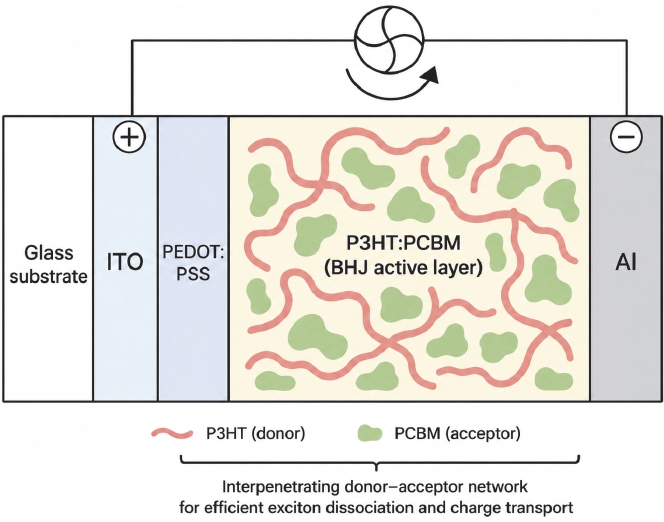
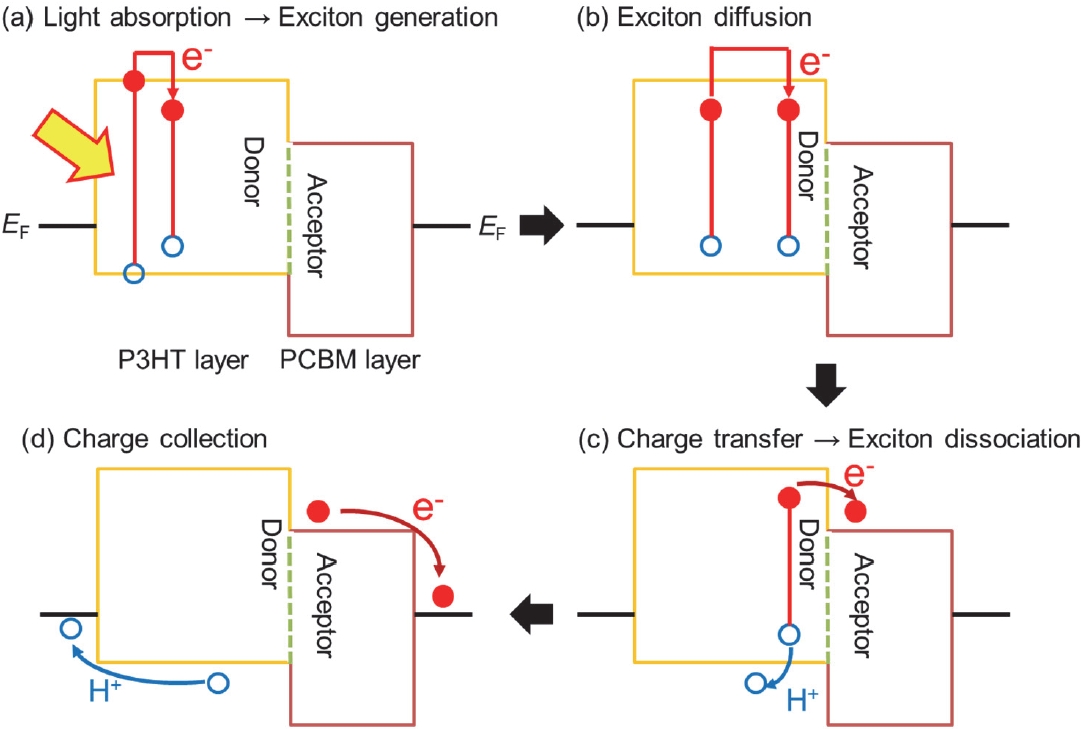
Fig. 2.Schematic illustration of the operating mechanism of P3HT:PCBM bulk heterojunction organic solar cells. (a) Light absorption in the donor material generates excitons. (b) Excitons diffuse toward the donor–acceptor interface. (c) Exciton dissociation occurs at the interface, resulting in electron transfer to the acceptor material (PCBM) and hole remaining in the donor material (P3HT). (d) Charge carriers are transported to the electrodes, where electrons are collected at the Al cathode and holes are collected at the ITO anode through the PEDOT:PSS layer
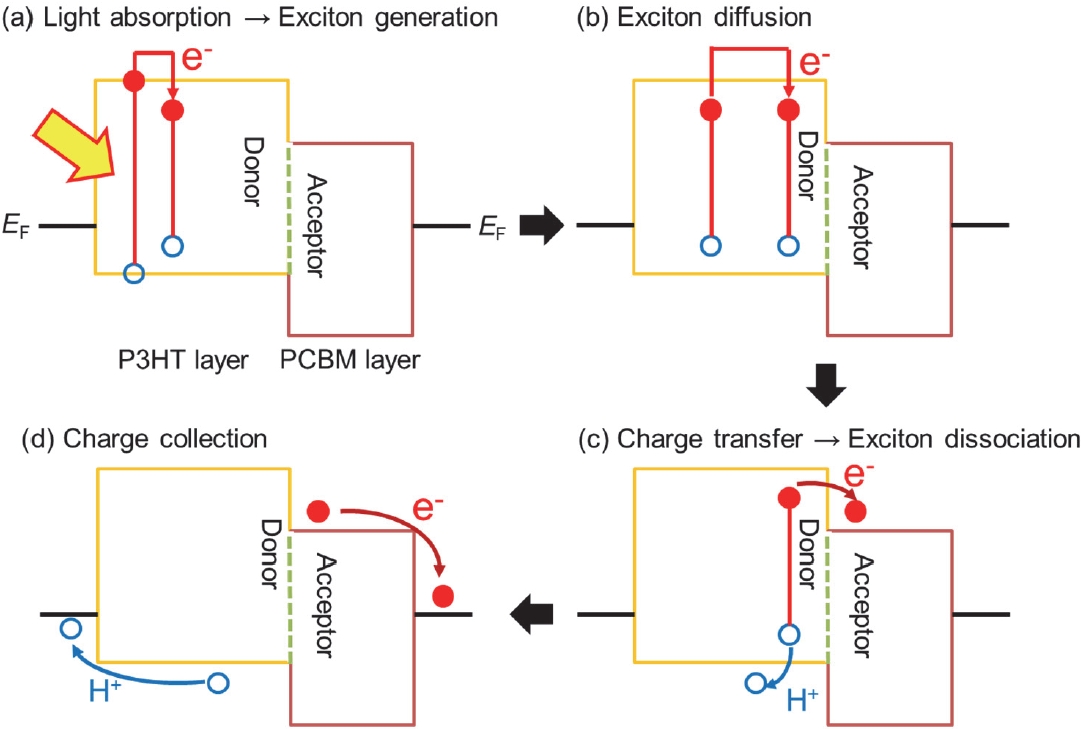
Fig. 3.UV–visible absorption spectra of P3HT:PCBM thin films prepared using different solvents with and without thermal annealing. Variations in absorption intensity indicate differences in molecular ordering and light harvesting characteristics
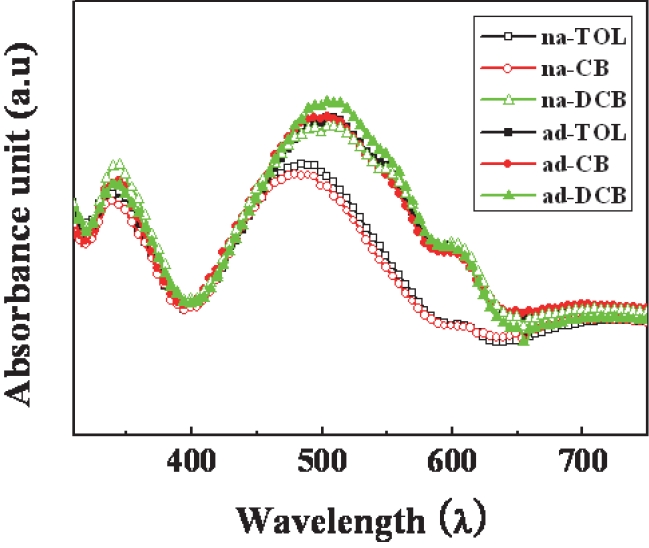
Fig. 4.X-ray diffraction patterns of P3HT:PCBM thin films processed with different solvents and thermal annealing conditions. Enhanced diffraction intensity indicates improved crystallinity and polymer chain ordering
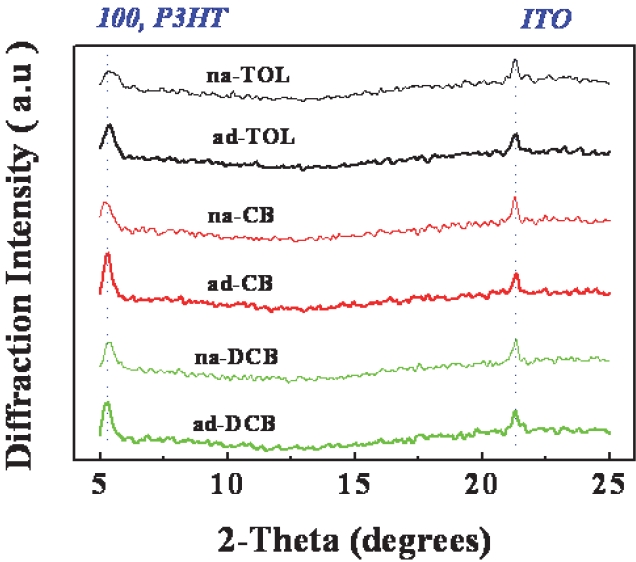
Fig. 5.Current density–voltage (J–V) characteristics of organic solar cells fabricated using different solvent conditions under AM 1.5 G illumination (100 mW/cm2). Device performance parameters including Jsc, Voc, FF, and η are extracted from these curves
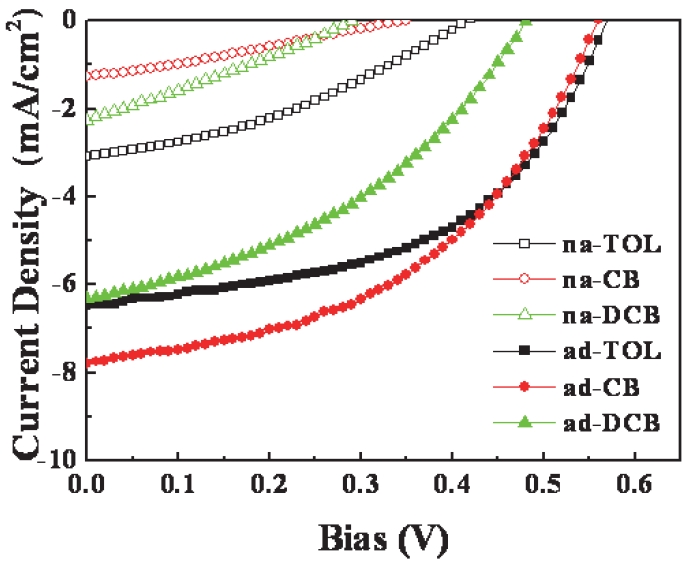
Table 1.Summary of photovoltaic parameters of P3HT:PCBM bulk heterojunction organic solar cells fabricated using different solvents (toluene, chlorobenzene, and dichlorobenzene) with and without thermal annealing. The extracted parameters include Jsc, Voc, FF, and η
Table 1.
|
Solvent |
JSC (mA/cm2) |
VOC (V) |
FF (%) |
η (%) |
|
na-TOL |
2.812 |
0.4113 |
36.02 |
0.42 |
|
na-CB |
1.123 |
0.3359 |
30.16 |
0.11 |
|
na-DCB |
2.029 |
0.2894 |
28.36 |
0.17 |
|
ad-TOL |
5.826 |
0.5733 |
50.29 |
1.68 |
|
ad-CB |
7.057 |
0.5605 |
46.38 |
1.83 |
|
ad-DCB |
5.745 |
0.4824 |
39.38 |
1.09 |
References
- 1. C. J. Brabec, N. S. Sariciftci, and J. C. Hummelen, Adv. Funct. Mater., 11, 15 (2001). doi: https://doi.org/10.1002/1616-3028(200102)11:1<15::AI D-ADFM15>3.0.CO;2-A
- 2. P. Peumans, A. Yakimov, and S. R. Forrest, J. Appl. Phys., 93, 3693 (2003). doi: https://doi.org/10.1063/1.1534621
- 3. W. Ma, C. Yang, X. Gong, K. Lee, and A. J. Heeger, Adv. Funct. Mater., 15, 1617 (2005). doi: https://doi.org/10.1002/adfm.200500211
- 4. J. K. J. van Duren, X. Yang, J. Loos, C. W. T. Bulle-Lieuwma, A. B. Sieval, J. C. Hummelen, and R. A. J. Janssen, Adv. Funct. Mater., 14, 425 (2004). doi: https://doi.org/10.1002/adfm.200305049
- 5. F. Padinger, R. Rittberger, and N. S. Sariciftci, Adv. Funct. Mater., 13, 85 (2003). doi: https://doi.org/10.1002/adfm.200390011
- 6. G. Li, V. Shrotriya, J. Huang, Y. Yao, T. Moriarty, K. Emery, and Y. Yang, Nat. Mater., 4, 864 (2005). doi: https://doi.org/10.1038/nmat1500
- 7. H. Hoppe and N. S. Sariciftci, J. Mater. Chem., 16, 45 (2006). doi: https://doi.org/10.1039/B510618B
- 8. G. Dennler, M. C. Scharber, and C. J. Brabec, Adv. Mater., 21, 1323 (2009). doi: https://doi.org/10.1002/adma.200801283
- 9. T. M. Clarke and J. R. Durrant, Chem. Rev., 110, 6736 (2010). doi: https://doi.org/10.1021/cr900271s
- 10. A. J. Heeger, Adv. Mater., 26, 10 (2014). doi: https://doi.org/10.1002/adma.201304373
- 11. H. Kim, K. W. Kim, and B. Hong, J. Korean Phys. Soc., 64, 817 (2014). doi: https://doi.org/10.3938/jkps.64.817
- 12. S. Cook, A. Furube, and R. Katoh, Jpn. J. Appl. Phys., 47, 1238 (2008). doi: https://doi.org/10.1143/JJAP.47.1238
- 13. S. S. van Bavel, M. Bärenklau, G. de With, H. Hoppe, and J. Loos, Adv. Funct. Mater., 20, 1458 (2010). doi: https://doi.org/10.1002/adfm.200902247
- 14. Y. Liang, Z. Xu, J. Xia, S. T. Tsai, Y. Wu, G. Li, C. Ray, and L. Yu, Adv. Mater., 22, E135 (2010). doi: https://doi.org/10.1002/adma.200903528
- 15. G. Janssen, A. Aguirre, E. Goovaerts, P. Vanlaeke, J. Poortmans, and J. Manca, Eur. Phys. J. Appl. Phys., 37, 287 (2007). doi: https://doi.org/10.1051/epjap:2007002
- 16. Y. E. Kim and G. H. Kim, J. Korean Inst. Electr. Electron. Mater. Eng., 35, 581 (2022). doi: https://doi.org/10.4313/JKEM.2022.35.6.7
- 17. S. S. Yang and Y. S. Park, J. Korean Inst. Electr. Electron. Mater. Eng., 36, 36 (2023). doi: https://doi.org/10.4313/JKEM.2023.36.1.6
- 18. M. Khaouani and H. Bouchriha Ben Salah, Trans. Electr. Electron. Mater., 23, 113 (2022). doi: https://doi.org/10.1007/s42341-021-00328-x
- 19. C. N. Hoth, P. Schilinsky, S. A. Choulis, and C. J. Brabec, Nano Lett., 8, 2806 (2008). doi: https://doi.org/10.1021/nl801365k
- 20. J. Y. Park and C. S. Jung, J. Korean Inst. Electr. Electron. Mater. Eng., 29, 589 (2016). doi: https://doi.org/10.4313/JKEM.2016.29.9.589